Let's make it
Instructions.
- 1
Prepare your printables: print the Halloween bat and spider templates and place them on a tray or protected surface.
- 2
Add the foam soap: an adult should shake and dispense the Mr. Bubble Foam Soap according to the can's directions.
- 3
Mix in the glue: add white school glue gradually, gently folding it into the foam. Avoid vigorous stirring because this can reduce the fluffy texture.
- 4
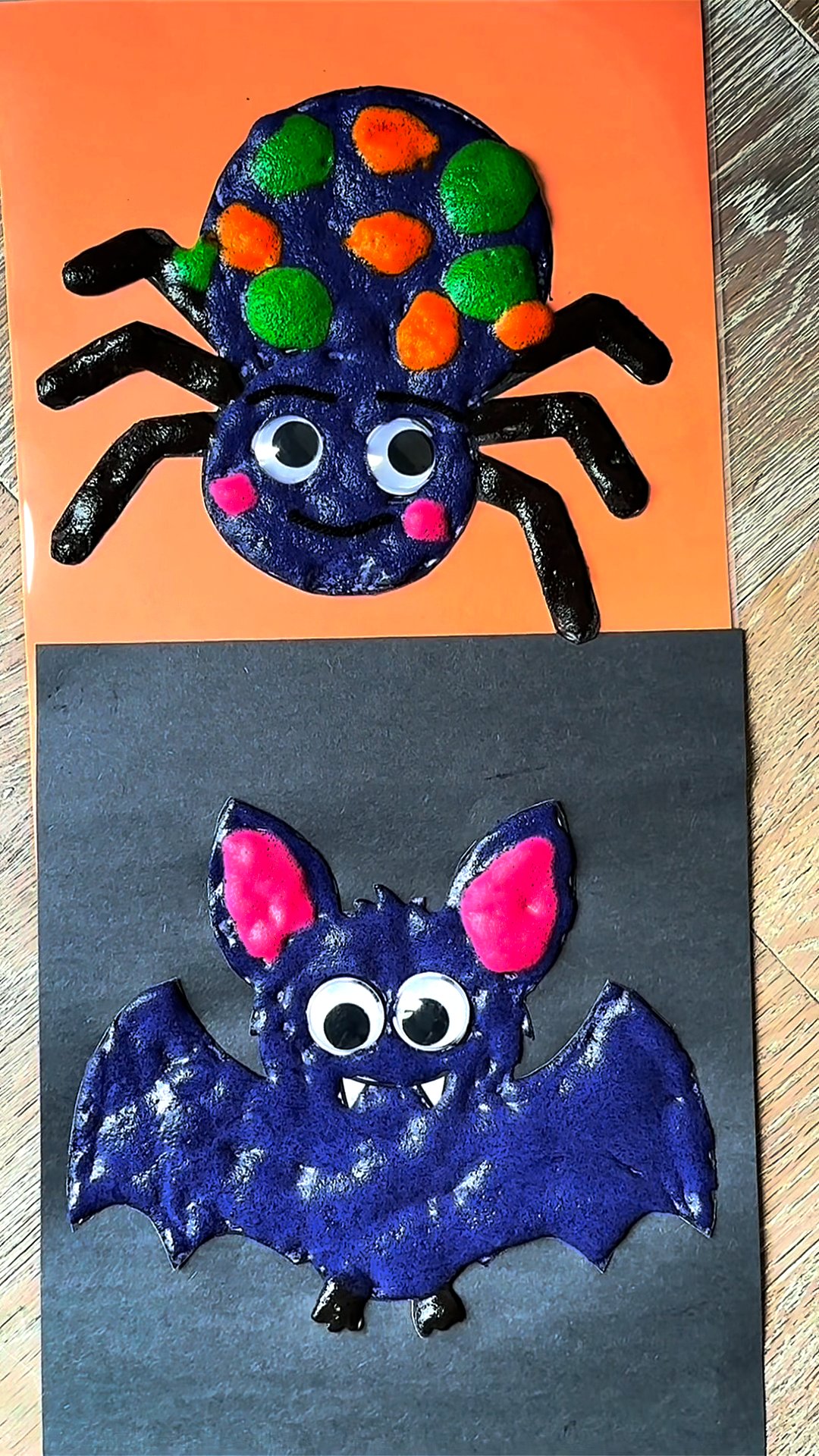
Add your colors: mix in a few drops of food coloring. Start with a small amount and adjust until you reach your desired shade. We used purple and orange from the Wilton neon set, plus green, black, and pink from our 12-color gel set: black for the spider's legs and pink for the bat's ears and spider's cheeks.
- 5
Decorate the bat and spider: use a paintbrush, spoon, or craft stick to spread the mixture across the printables. Kids can fill in the bat's body and wings, cover the spider in colorful spots, or create raised dots and patterns of their own. For small areas like the bat's ears, the spider's cheeks, and little spots, a cotton swab (Q-tip) works great. There is no single correct way to decorate them.
- 6
Add the finishing touches (optional): while the paint is still wet, press on googly eyes, and add small pieces of yarn to give the spider a smile and eyebrows.
- 7
Allow to dry: place the finished artwork on a flat surface where it won't be disturbed. Allow at least several hours; thick areas may need overnight or longer, depending on the mixture and environment. The paint may gradually lose some of its puffiness, but the finished artwork can still have an interesting raised texture.
Safety tip
- Not taste-safe: foam soap, glue, and food coloring should never go in the mouth. Don't let children lick fingers, brushes, or craft sticks, and keep this activity away from children who still put materials in their mouths.
- This activity requires adult preparation and supervision for the whole activity. Keep the paint away from mouths and eyes.
- Teachers and childcare providers: follow your school, daycare, or facility's policies before using foam soap or any other material. Foam soap is not automatically approved for classroom use, and some facilities restrict aerosol products.
- Follow the safety precautions and label directions on every product you use, including the foam soap, glue, food coloring, and googly eyes. The foam soap packaging warns against use by children under 3.
- Mr. Bubble Foam Soap comes in a pressurized aerosol container. Adults should handle and dispense it, and keep the container out of children's reach.
- Keep the can away from heat and direct sun. Never puncture, burn, or expose it to temperatures above 120°F (49°C). Do not deliberately inhale the aerosol or spray it toward faces, and avoid eye contact.
- Never use raw flour: uncooked flour may contain harmful bacteria, including E. coli and Salmonella, and the CDC advises against children playing with raw-flour craft mixtures, even when they aren't meant to be eaten.
- If you choose to add flour, use only commercially heat-treated flour and check that the label says heat-treated. Heating flour at home isn't a reliable substitute, and even heat-treated flour doesn't make the paint edible.
- Choking hazards: small caps, googly eyes, decorations, and pieces of dried paint that become detached may present choking hazards. Avoid loose embellishments with younger children, keep small materials out of reach, and supervise closely.
- Foam soap can contain fragrances and other ingredients that may irritate sensitive skin; a fragrance-free foam soap is a gentler choice. Once mixed with glue and coloring, the paint is a craft material, not a skin-care product. Food coloring may stain clothing, hands, and surfaces.
- Wash hands, tools, and work surfaces after the activity. Discard leftover wet mixture rather than saving it for later use.
What Skills Does Puffy Paint Support?
As a pediatric occupational therapist, I love finding ways to make art activities more engaging while naturally working on developmental skills.
Fine motor control: Using a brush, craft stick, or cotton swab encourages children to practice controlled hand and finger movements.
Visual-motor coordination: Staying within an outline and decorating small details requires coordination between the eyes and hands.
Hand strength: Holding tools, applying paint, and managing small movements engage the muscles of the hands.
Creativity and sensory exploration: Children can experiment with colors, shapes, and texture while making their own artistic choices.
A Note for Teachers and Childcare Providers
We know that not every classroom can use traditional shaving cream. Mr. Bubble Foam Soap was a fun alternative for us to experiment with, but it is still an aerosol product, and some classrooms may have restrictions on fragrance, soap ingredients, or pressurized containers.
For classrooms, we recommend the fragrance-free Mr. Bubble Extra Gentle Foam Soap.
Always follow your school, daycare, or facility's policies, and consider individual student needs before introducing new materials.
Field Notes
- Our puffy paint activities have been a favorite, but we've received quite a few comments from teachers who can't use shaving cream in their classrooms, so we experimented with Mr. Bubble Foam Soap in our Halloween puffy paint recipe and made bats and spiders.
- Which foam soap? We used the Mr. Bubble foam soap with frosting nozzles because it's what we had at home. For classrooms, the fragrance-free Mr. Bubble Extra Gentle Foam Soap is the best choice.
- About the flour in our video: our test batch included a small amount of flour, which helped it stay a bit puffier. It's not needed, and if you try it, use only commercially heat-treated flour, never raw flour.
- Sensory exploration doesn't always require touching materials directly. Using tools like brushes, craft sticks, and cotton swabs is a great option for children who prefer to keep their hands clean.
- Tag @live.play.grow if you make a bat or spider. We'd love to see your creations.